not overwhelm.
Naturally Aspirated V12
A naturally aspirated V12 chosen for mechanical transparency. Throttle response remains immediate. Power builds progressively. Target output is approximately 800 hp/ton — a deliberate balance between performance and controllability. Usable horsepower prioritised over peak dyno figures. Engineered for sustained delivery under thermal stress.
Composite Monocoque
Lightweight composite monocoque architecture engineered for torsional rigidity and driver feedback. Structural stiffness supports aerodynamic load and suspension precision without excess weight. Material selection favours strength-to-weight efficiency. Every component evaluated against necessity.
Ground-Effect Platform
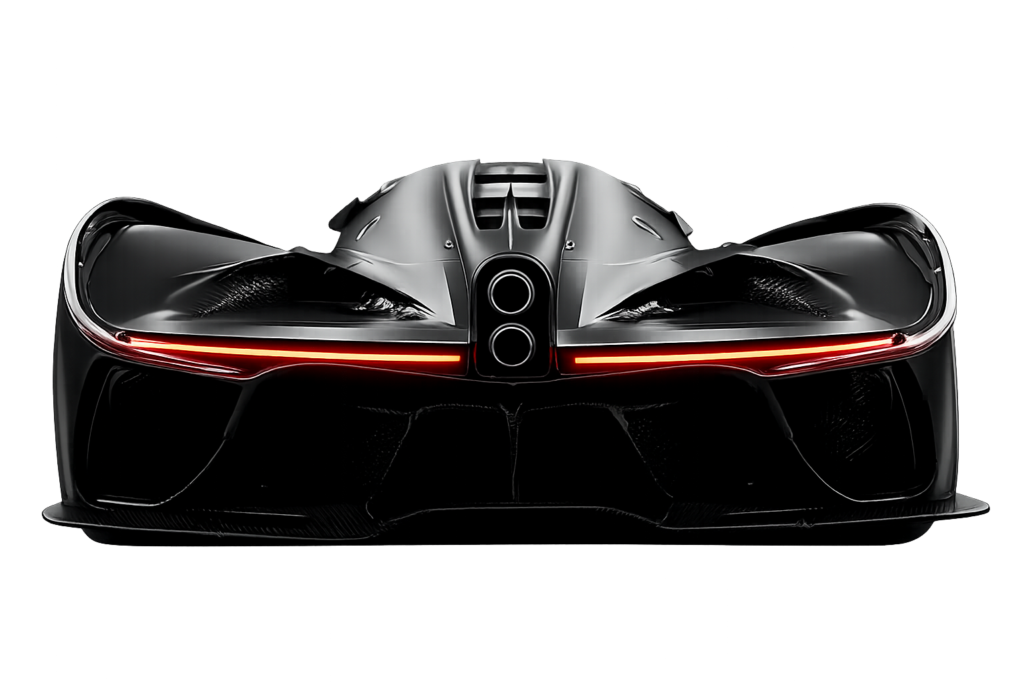
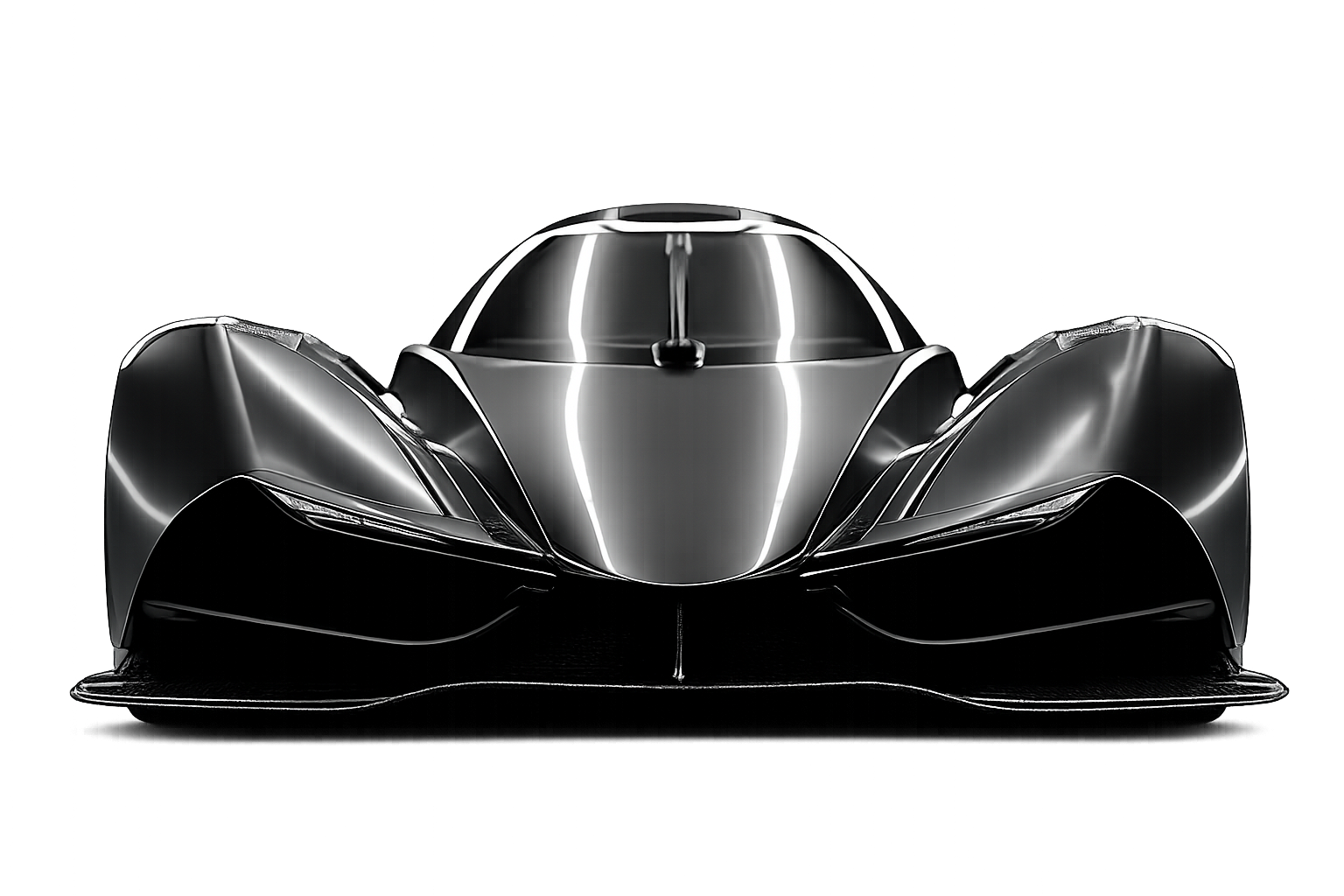
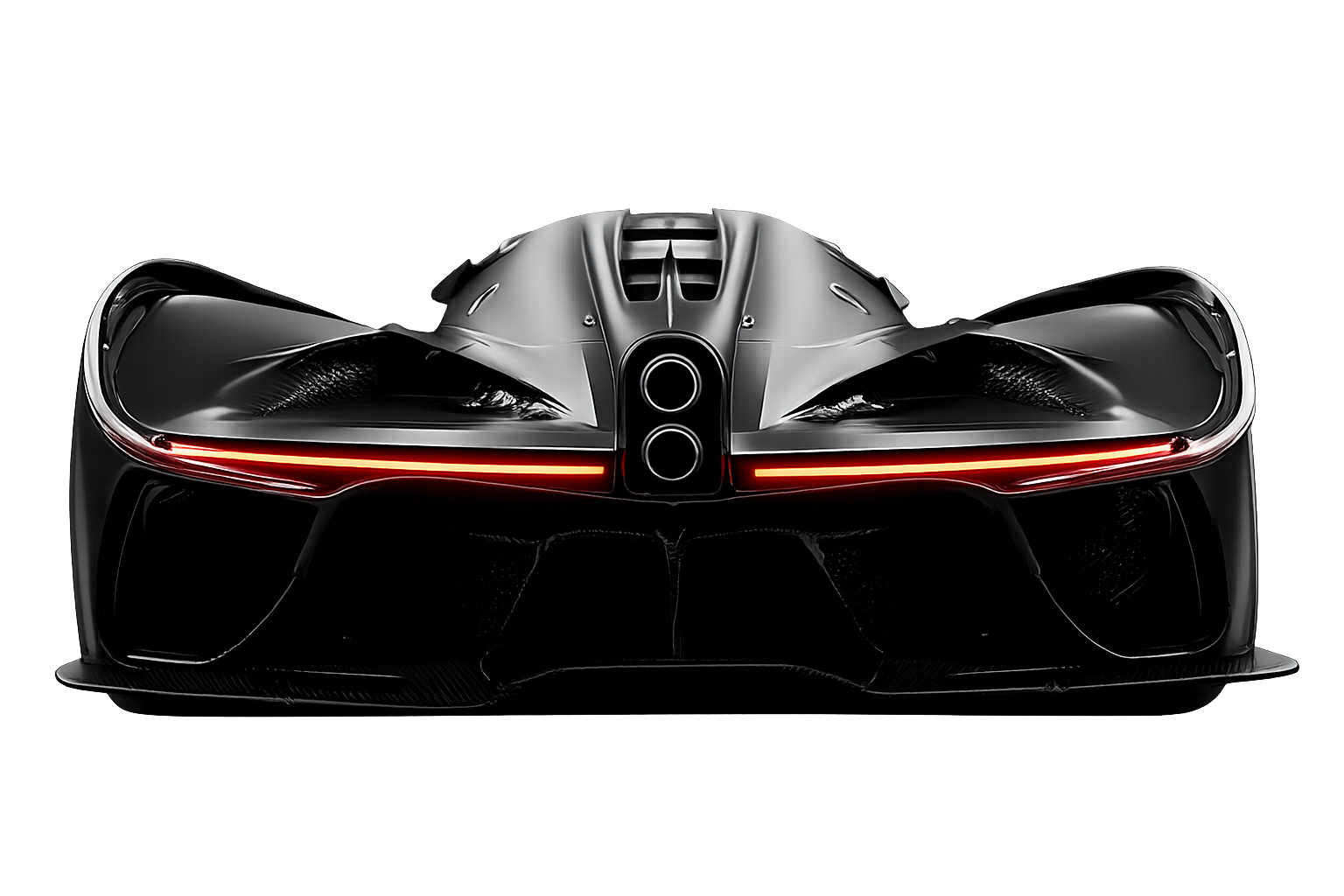
Developed through extensive airflow study to generate balanced downforce with minimal drag penalty. Ground-effect principles inform the underbody architecture. Upper surfaces shaped to guide, not disrupt, the air — aerodynamic efficiency designed for high-speed confidence and predictable behaviour under load and through long, fast corners.
A Unified System
Aerodynamics, power delivery, and structural architecture developed as a unified system, not independent disciplines. Each element informs the other, resulting in a machine where every decision serves a singular purpose.